

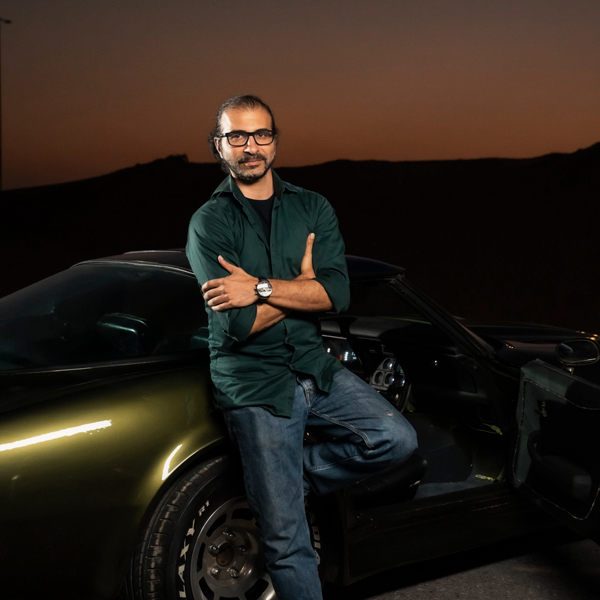
Every classic car has a story. Some were family heirlooms, others were forgotten in dusty garages, and many were once icons of their generation before time slowly took its toll. Bringing these machines back to life requires much more than technical knowledge—it demands patience, craftsmanship, and a genuine passion for automotive history.
That is exactly what makes Ray’s Customs stand out.
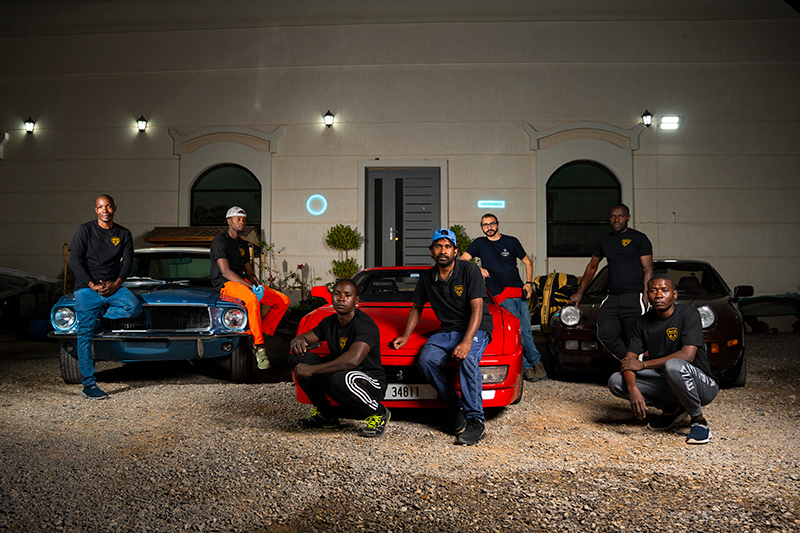
Located in the UAE, Ray’s Customs has earned a reputation for transforming neglected classics into stunning, road-ready masterpieces. Whether the project involves a complete factory-correct restoration or a modern restomod with upgraded performance, every vehicle is approached with the same philosophy: preserve the soul of the car while building something that can be enjoyed for years to come.
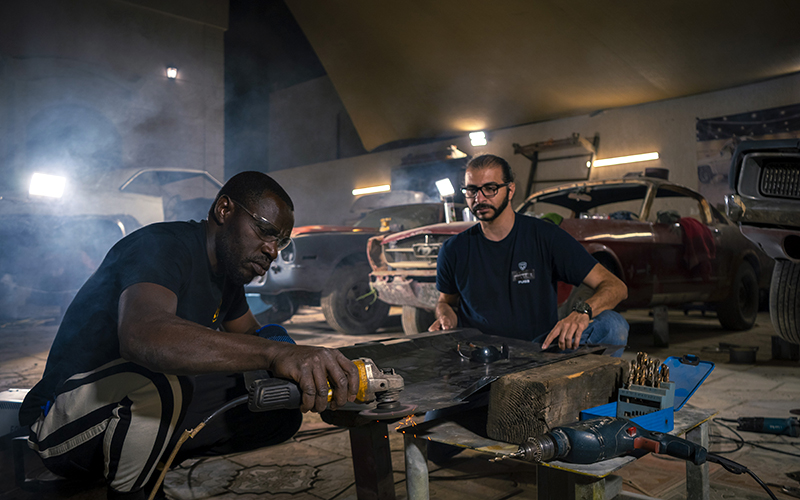
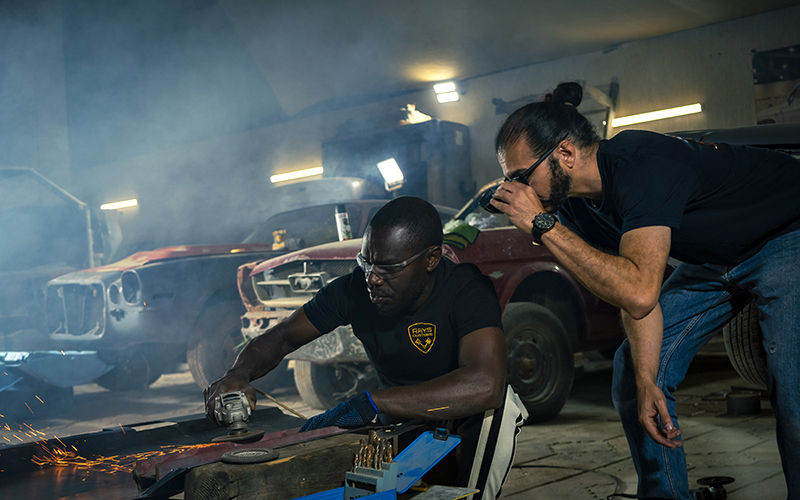
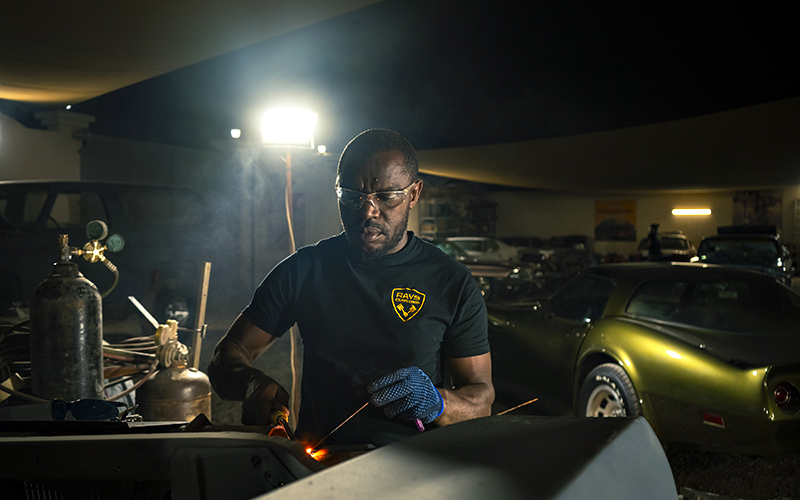
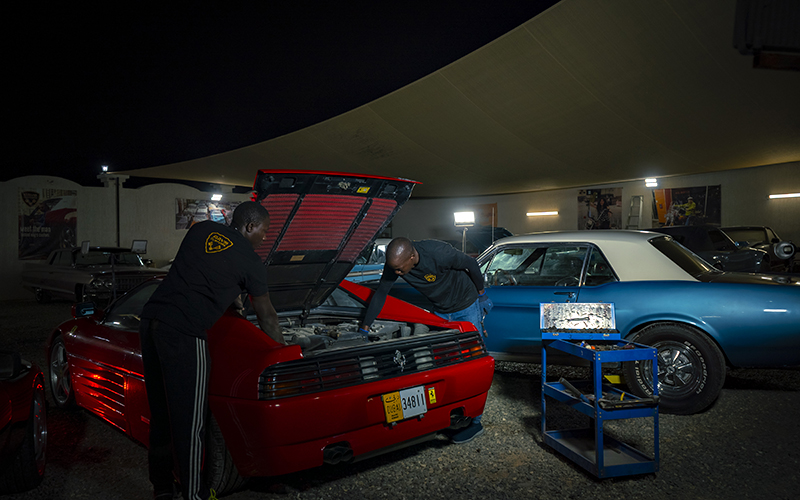
Behind every completed project is a team that believes classic cars deserve more than simply being displayed in museums. They should be driven, experienced, and passed on to future generations. Their workshop combines traditional metal fabrication, body restoration, modern engineering, and meticulous attention to detail to create vehicles that look timeless while performing with modern reliability.
During my visit, I had the opportunity to walk through the workshop, see several ongoing restoration projects, and learn more about the philosophy behind the company. If you haven’t watched the workshop tour yet, I highly recommend starting with the video below before continuing with the interview.
Behind the Scenes of Classic Car Restoration
The video offers an inside look at the craftsmanship, engineering, and attention to detail that go into every restoration project. After the tour, I sat down with the founder to discuss the journey of Ray’s Customs, the challenges of restoring classic automobiles, the future of the industry, and the stories behind some of their most memorable builds.
For me, a classic car has something that a modern car can never completely reproduce, and that’s character.
When you look at a Cadillac from the 1960s or a Mustang or a Charger, or even an old Porsche, you’re looking at the design philosophy and engineering of an entirely different period.
The chrome, the proportions, the mechanical engineering, even the imperfections give that car personality.
What attracted me to restorations was the idea of taking something that may have been neglected for like, 30, 40, or 50 years and bringing it back to life.
But eventually I realized that restorations are not just about repairing cars.
You’re preserving a piece of automotive history.
That basically became the philosophy behind race customs here in Ras Al Khaimah.
We don’t want to simply make an old car look beautiful.
We want to understand what the car is, what the owner wants it to become, and build it properly. For some clients, that means a factory correct restoration. For others, it means a rest mod with modern brakes, cooling, suspension, you know, efi, or even a drivetrain technology from a donor car.
That’s part of what I find exciting.
Every car that enters the workshop has a completely different story. Each owner has a completely different vision.
So, for a first-time collector, I normally prefer cars with three things: Strong international demand, good parts availability, and an established, enthusiastic community.
That’s why cars such as the first gen Mustangs, selected Corvettes, certain Porsche models, or even desirable Mercedes Benz German Classics are well specified American muscle cars can be an interesting place to start from.
I would rather see a new collector buy an excellent example of a relatively accessible model, than buy the cheapest example of a very expensive model. The purchase price is only your entry ticket. You know you have a lot more to do after that.
The cheap classic with severe rust, missing trim, incorrect components and no documentation, can become extremely expensive very quickly.
My advice is simple. Buy the best foundation your budget allows and preferably have someone who understands that particular model inspect the car before you buy it.
That inspection can save you tens of thousands later.
I’d say the biggest mistake people make when buying a classic car, is they buy with their eyes instead of with a calculator. A car can look incredible in photographs and still be a terrible restoration candidate.
Paint can hide rust. Undercoating can hide previous repairs. A beautiful interior can distract you from an incorrect engine, missing components, or a badly repaired chassis, and people often underestimate the price of all these little things, and then they go chasing garages to do a cheaper job, a cheaper job, a cheaper job!
And this causes shortcuts in projects.
One missing piece of trim doesn’t sound important unless you discover that that correct original piece is extremely difficult to find and costs a few fortunes to buy.
So, before race customs starts a serious restoration, I usually understand what we’re starting with.
What’s original?
What is missing?
How much corrosion is there?
What condition is the chassis and body in?
Is the drivetrain correct?
Are the identification, VIN numbers, chassis numbers, and documentation in order, and most importantly, what is the finished car realistically worth?
You know, restorations without an initial strategy are where budgets usually get destroyed.
So, for that, we basically work backwards from the finished car.
First, I establish the realistic market value of the car once completed. Then I look at the acquisition price and calculate the likely restoration cost. That includes the body and chassis, mechanical work, engine and transmission, suspension, brakes, electrical system, interior, chrome, glass and the weather stripping. Of course, wheels and tires and all the small components people tend to forget.
Then comes the most important part, contingency.
With a 50- or 60-year-old car, you have to expect surprises. Once you strip a car to bare metal, you may discover repairs from decades ago that nobody knew existed.
The second consideration is specification. A desirable engine, transmission, body style, factory options, documented history can all go a long way. And finally, I look at liquidity.
It doesn’t matter what somebody is asking online.
My dad always used to say there’s an ask for every seat.
What I actually want to know is what comparable cars are actually changing hands in today’s day and age.
The real question here is, should we restore this particular car to this particular standard at this particular cost? So that’s usually a question I ask the client.
The first thing I tell people is that not every classic car is an investment. That’s for sure.
Age alone doesn’t make a car valuable. Collector value normally comes from a combination of rarity, desirability, specification, originality, provenance, condition and historical importance.
You also have supply working in your favor. Manufacturers aren’t making any more 1960s Chargers or First Gen Mustangs or vintage Cadillacs every year Some cars disappear through accidents, corrosion, poor restorations, or irreversible modifications.
That’s been the norm for the longest time. But there is another factor, and that’s emotion. Emotion from movies, emotion from Hollywood. Stuff like that.
Someone who had a poster of a particular car at 15 years may reach 45 or 50 and finally have the financial availability to actually buy it.
That’s what nostalgia is all about.
You know, someone’s dad or someone’s uncle had a car that he used to drive him to school in, and now that kid who’s a grown up wants that car. However, here’s how ROI actually works.
It starts before you buy the car, not after you restore it. If you buy the wrong car for too much money, even a fantastic restoration may not make the project profitable.
So, here’s what we look at. Purchase value, shipping, parts, labor, restoration cost, expected market value, stuff like that. If those numbers don’t make sense, it’s not an investment, it’s a passion project then. And there’s absolutely nothing wrong with that as long as the client understands the difference.
So, for a first-time collector, I normally prefer cars with three things: Strong international demand, good parts availability, and an established, enthusiastic community.
That’s why cars such as the first gen Mustangs, selected Corvettes, certain Porsche models, or even desirable Mercedes Benz German Classics are well specified American muscle cars can be an interesting place to start from.
I would rather see a new collector buy an excellent example of a relatively accessible model, than buy the cheapest example of a very expensive model. The purchase price is only your entry ticket. You know you have a lot more to do after that.
The cheap classic with severe rust, missing trim, incorrect components and no documentation, can become extremely expensive very quickly.
My advice is simple. Buy the best foundation your budget allows and preferably have someone who understands that particular model inspect the car before you buy it.
That inspection can save you tens of thousands later.
I’d say the biggest mistake people make when buying a classic car, is they buy with their eyes instead of with a calculator. A car can look incredible in photographs and still be a terrible restoration candidate.
Paint can hide rust. Undercoating can hide previous repairs. A beautiful interior can distract you from an incorrect engine, missing components, or a badly repaired chassis, and people often underestimate the price of all these little things, and then they go chasing garages to do a cheaper job, a cheaper job, a cheaper job!
And this causes shortcuts in projects.
One missing piece of trim doesn’t sound important unless you discover that that correct original piece is extremely difficult to find and costs a few fortunes to buy.
So, before race customs starts a serious restoration, I usually understand what we’re starting with.
What’s original?
What is missing?
How much corrosion is there?
What condition is the chassis and body in?
Is the drivetrain correct?
Are the identification, VIN numbers, chassis numbers, and documentation in order, and most importantly, what is the finished car realistically worth?
You know, restorations without an initial strategy are where budgets usually get destroyed.
So, for that, we basically work backwards from the finished car.
First, I establish the realistic market value of the car once completed. Then I look at the acquisition price and calculate the likely restoration cost. That includes the body and chassis, mechanical work, engine and transmission, suspension, brakes, electrical system, interior, chrome, glass and the weather stripping. Of course, wheels and tires and all the small components people tend to forget.
Then comes the most important part, contingency.
With a 50- or 60-year-old car, you have to expect surprises. Once you strip a car to bare metal, you may discover repairs from decades ago that nobody knew existed.
The second consideration is specification. A desirable engine, transmission, body style, factory options, documented history can all go a long way. And finally, I look at liquidity.
It doesn’t matter what somebody is asking online.
My dad always used to say there’s an ask for every seat.
What I actually want to know is what comparable cars are actually changing hands in today’s day and age.
The real question here is, should we restore this particular car to this particular standard at this particular cost? So that’s usually a question I ask the client.
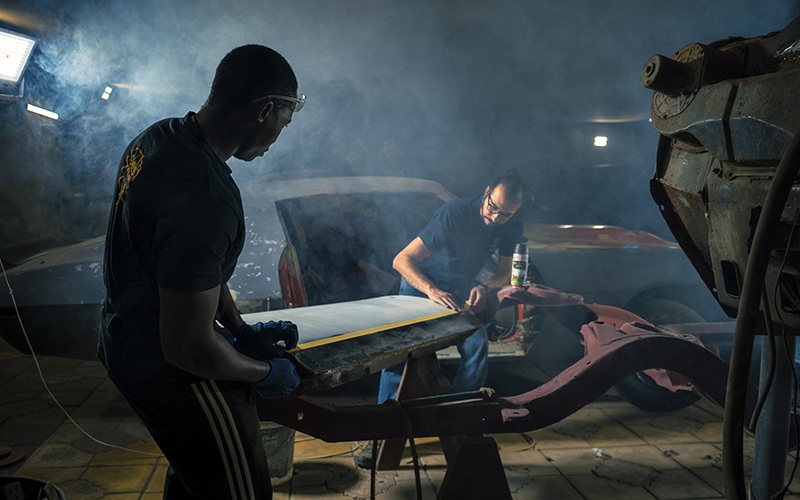
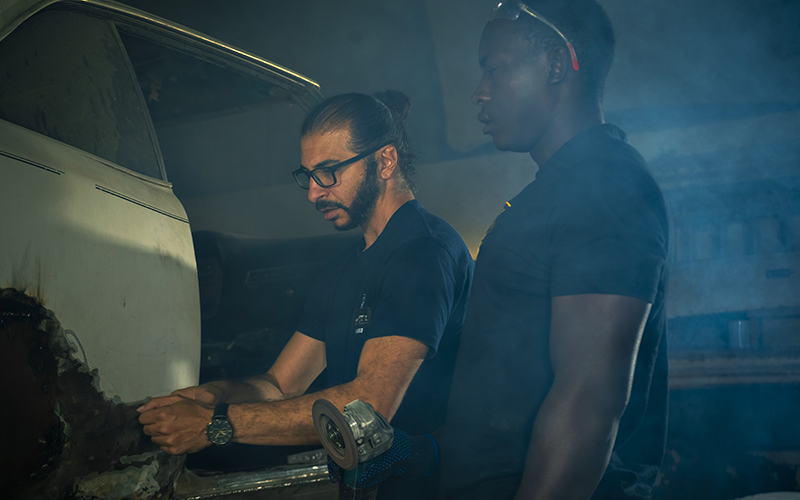
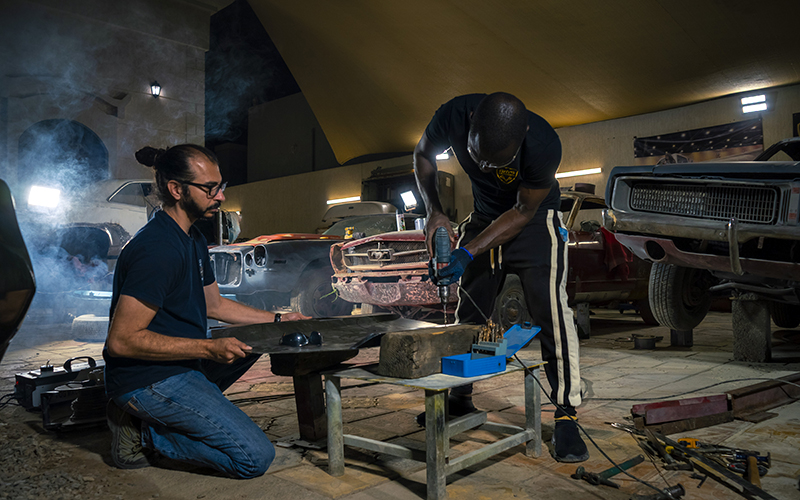
Can you share one of your most successful restoration projects? How much did the car cost to buy, how much was invested in the restoration, and what was the final selling price?
I don’t per se have. I wouldn’t really define it as a successful restoration project, but any successful restoration project that has a low build cost yet high value, high-quality output, I consider a successful project.
For example, you buy any sought-after classic car under Dh10,000 and you spend about 60, Dh70,000, which brings the bill to about Dh100,000.
And the value of that finished project car is around, you know, 150, 200k – 250k.
Sometimes I would consider a successful project.
You know, rule of thumb is if you can build the project 45 to 50% lower than market value than that, I consider a successful project.
The UAE has always had a very strong car culture, but I think we’re seeing the car culture mature now. People who already own modern supercars are beginning to appreciate something completely different. Now you can buy a new luxury car, and see another one at the next traffic light.
However, you arrive in a beautifully restored 1960s 50s Cadillac convertible or a classic Mustang or a Porsche, and the experience is completely different.
It starts conversations, you know, like, built, not bought.
Interestingly, it’s not always the engine or the transmission. Sometimes the hardest parts are the smallest ones.
A particular piece of stainless-steel trim or an original switch, a vent, window mechanism, even sometimes an emblem can stop a restoration for weeks if not months. Especially given, you know, the time frame on shipping nowadays.
That’s why sourcing is a major part of what we do.
We source internationally from specialist suppliers, dismantlers, scrap yards. I have my key people that I approach for different car brands.
Sometimes an original component can be restored.
Sometimes reproduction is the sensible solution and sometimes we just have to fabricate something ourselves.
The important thing is knowing the difference between a component that can safely be reproduced, and one where original material affects the car’s value and authenticity.
I would say I’d rather explain honestly to a client that we’ve been waiting for the correct component than install the wrong part simply to say that the car is finished.
I wouldn’t automatically spend the entire 100,000 on the purchase price. That’s one of the biggest differences between buying emotionally and investing intelligently.
I might allocate perhaps 60,000 to 80,000 dirhams towards acquiring the right car and retaining the balance for inspection, transportation, preventative maintenance, stuff like that.
On average, most of my complete restoration jobs, I try to acquire the car below 30 – 40,000 drums, and I would look for a car with international demand rather than something dependent on one local market.
Depending on what becomes available, I would investigate cars such as a very good air-cooled Porsche, the right Corvette, a desirable American muscle car, or another model with a strong collector demand, good provenance and specification collectors constantly want.
But I wouldn’t say buy model XYZ and your money is guaranteed.
I would rather buy the right example of the right car than simply the right badge. Two cars of the same year and model can have dramatically different values because of condition, originality, engine options, documentation, all that stuff. And the same model two different years could have very different values. Chargers, for example, between the years of 68 to 70 are sought after. However, the same charger, yours between 71 to 73, not so much.
I think one of the most interesting changes will be the definition of the word classic. The collector entering the market 10 years from now may not have grown up dreaming of a 1950s car. Their dream may have been a Porsche from the 1990s or a BMW or a Japanese performance car from that era.
So, I think, collectors should watch out for transition from traditional classics to into what we now call modern classics. Like a good example of a modern classic would be a Honda Prelude.
Cars with naturally aspirated engines or manual transmissions or hydraulic steering, are becoming historically more interesting because, that type of driving experience is disappearing now from cars.
But I would still concentrate on the fundamentals which are rarity, specification, originality, provenance, condition and cultural significance.
I would say, GCC has a different kind of grab to it whereas the American and the European markets have a different kind of grab to it.
The message I want people to understand about race customs is, there is one other subject that’s very important to me because restorations require an enormous amount of trust.
A client may handle a workshop, a car worth hundreds of thousands of dirhams. He may also be committing a significant restoration budget. Unfortunately, one of the biggest frustrations people experience here locally in the market with restoration projects is the lack of communication or the lack of ownership.
This unfortunately is consistent and I’m hearing a lot more complaints from garages locally and you know, from clients and stuff that this tends to happen more and more often.
The car enters a workshop, money is paid, months pass and the owner doesn’t really know what’s happening. That’s not the experience we want. At Race Customs, a restoration should be managed as a project, not treated as a car sitting in the corner of a workshop.
Before major work begins, the client should understand the scope of work, understand the expected stages, the budget and what we’re trying to achieve. Then the project should progress through milestones, whether it be stripped down, assessment body, chassis, mechanical paint assembly, interior testing, final detailing, and throughout the process, communication is critical via through pictures, videos, stuff like that.
You know, at Race Customs, if we discover something unexpected underneath the pain, the customer should know about it. If a rare component is delaying the project, the customer should know about it.
If something is going to affect the budget, there should be a conversation before the work simply continues. Because ultimately, it’s the client’s car and the client’s money.
So, for me, transparency doesn’t mean pretending that restoration never has delays or surprises. Anyone who has a genuinely restored 50s- or 60s-year-old car knows that’s impossible. Transparency here means that when something changes, the customer isn’t left wondering what happened to his car.
That’s the reputation we’re building here at Race Customs in Russell Kemal.
We want somebody to walk into the workshop with an old car, or even just a dream of owning one, and know that we can guide them through the complete process.
Finding the right car, evaluating it before purchase, planning the build, sourcing the parts, restoring it, and ultimately creating something that the owner is proud to drive, collect or eventually sell it even.
You know, we’re not really just interested in simply finishing cars, we’re interested in building cars and relationships that last.
That’s my end goal here.